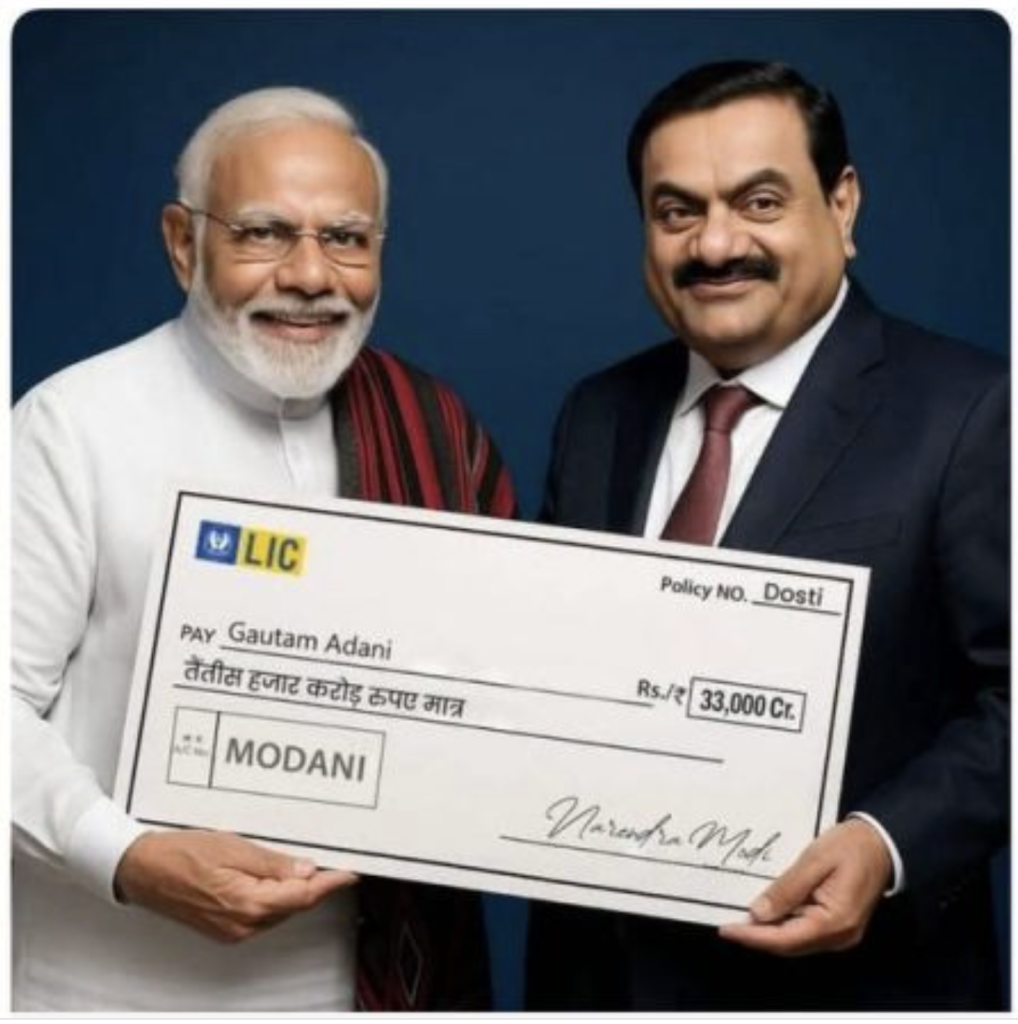
Did you know that India’s Jharkhand state has the largest coal reserves in the country — yet there’s a coal-based power plant there that imports its coal from Australia, over 9,000 km away? The coal lands at Dhamra Port in Odisha and is then transported 600 km by rail to Godda, Jharkhand. Ever wondered why?
After becoming Prime Minister, Mahatma ji (referring to Modi) visited Bangladesh the very next year and convinced Sheikh Hasina to sign a power export deal with his “close friend’s” private power company. This company later set up the Godda Power Plant, which required high-calorific, low-ash coal — conveniently supplied from Australia’s Carmichael mine, also owned by the same friend.
At the time, Indian law allowed power exports only if a company had surplus domestic power. But since this company didn’t meet the criteria, it was given special exemption. Another rule required that 25% of the power must be supplied domestically, yet Jharkhand’s BJP government changed the rule — allowing the company to export 100% of its electricity.
To top it off, despite environmental objections, the government approved a 100 km water pipeline from the Ganga River instead of using the nearby Chir River. Since importing coal from Australia raises costs, the plant was declared a Special Economic Zone (SEZ) — granting exemptions from customs duties, GST, carbon taxes, and even five years of 100% income tax relief, amounting to over $1 billion in benefits.
Now here’s the clever part — the company still charges Bangladesh all those taxes and surcharges in the power bills, even though it’s exempt in India! As a result, Bangladesh is paying 27–63% more for power from this company than it would pay others. Moreover, it signed a 25-year contract that guarantees the company ₹4,000 crore annually in “capacity charges,” even if Bangladesh doesn’t buy any electricity.
Sure, it’s fine if a businessman succeeds — but not by rewriting laws and exploiting public resources. In Bangladesh, this project has faced widespread opposition and is even cited as one of the key reasons behind the uprising against Sheikh Hasina, who was accused of favoring foreign corporates. The coup triggered strong anti-India sentiments, and Hindus in Bangladesh faced retaliation.
When Hasina fled, Modi didn’t utter a word about the persecution of Hindus — but within one week of her departure, his government amended the rules again, allowing the same company to sell power domestically instead of exporting it.
This clearly shows how far the current government will go to bend rules for one industrialist — granting contracts, rescuing him from financial troubles, and even pushing foreign diplomacy for his benefit. In every country where this “friend” has expanded — Bangladesh, Sri Lanka, Indonesia, Australia — locals accuse his projects of environmental damage, land grabs, and corruption. In fact, a corruption case in the U.S. includes strong evidence against him, and it’s no secret that Trump might be holding some of those cards.
Maybe that’s why, despite repeated humiliation, Modi never utters Trump’s name anymore — total surrender mode.
And here’s a final question: when Modi once opposed allowing U.S. entry into India’s agriculture market, he said — “It will cause me personal loss.”
What kind of personal loss was he talking about, exactly?
Any guesses?

👇
#AdaniPower #GoddaProject #CoalPolitics #CorporateCronyism #ModiGovernment #BangladeshDeal #EnergyScam #JharkhandCoal #CronyCapitalism #PowerPolitics #ForeignInfluence #Rosneft #CarmichaelMine #ModiAdaniNexus #IndiaBangladesh #EconomicCorruption #CorporateGreed #PoliticalBargain #AdaniEmpire #GlobalScandal #PrafulKr
About The Author