The brutality of the Huns was so terrifying that empires from China to the mighty Roman Empire trembled in fear. This single barbaric tribe left no great civilization untouched by its devastation.
China itself was so horrified that it abandoned the idea of confronting the Huns in open battle and instead confined itself behind hundreds of kilometers of massive walls—what the world now knows as the Great Wall of China.
When China turned defensive, a powerful Hun contingent surged westward. Under the command of Attila, they crushed Poland and unleashed rivers of blood across Europe. The vast Roman Empire eventually collapsed under their relentless onslaught. Drunk on victory, the Huns then turned their gaze toward India, advancing through Gandhara.
As they moved to swallow Sindh, they were confronted by the formidable Gupta Empire, ruled by the mighty Emperor Kumaragupta.
Determined to eliminate the Hun threat completely, Kumaragupta did not send a general—he sent his own son, Prince Skandagupta.
Skandagupta annihilated the brutal Hun forces. When he returned to Pataliputra victorious, his aged father honored him by performing the Ashvamedha Yajna. After Kumaragupta’s passing, Skandagupta ascended the throne as Emperor of India.
But the threat was not over.
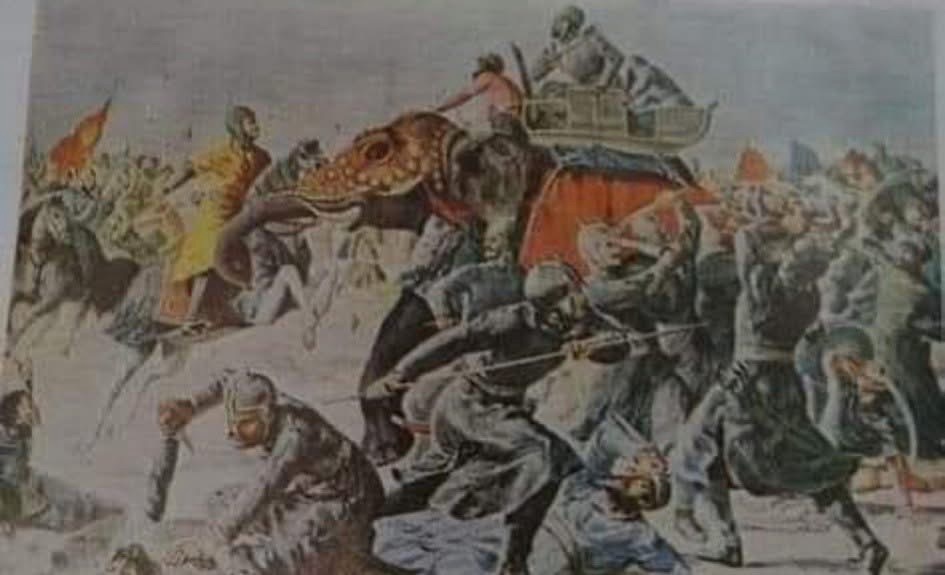
In the later years of Skandagupta’s reign, the Huns regrouped and launched another invasion under a commander named Khingila. When the Indian forces initially began to falter, Skandagupta personally took command and marched toward western India.
At that very moment, betrayal struck from within. While the emperor was fighting on the battlefield, his scheming stepbrother Purugupta deceitfully seized power in Pataliputra.
When this news reached Emperor Skandagupta, he faced a defining choice:
return to reclaim his throne, or remain on the battlefield to destroy the Huns.
The grandson of the legendary Vikramaditya and a guardian of dharma, Skandagupta chose the nation over the throne.
He knew that if he turned back, countless innocents would be slaughtered, women dishonored, and temples destroyed by the barbaric invaders.
Skandagupta fought on.
He defeated the Huns, drove their commander Khingila far beyond India’s borders, and ultimately attained martyrdom on the battlefield.
The magnificent emperor of Pataliputra laid down his life thousands of kilometers away in Punjab—but before his sacrifice, he ensured the security of the nation and the preservation of dharma.
By sacrificing first his power and then his life, Skandagupta saved his people and achieved immortality in history.
His character and national spirit remain a guiding light for those who mistake power for purpose while turning away from the defense of nation and faith. Tragically, few in modern India even remember this heroic saga—and when a society forgets such examples, expecting leaders to emulate Skandagupta becomes nothing more than a bitter irony.
Tags: Skandagupta, GuptaEmpire, IndianHistory, HunsInvasion, AncientIndia, Vikramaditya, Dharma, NationalSacrifice, ForgottenHeroes
About The Author