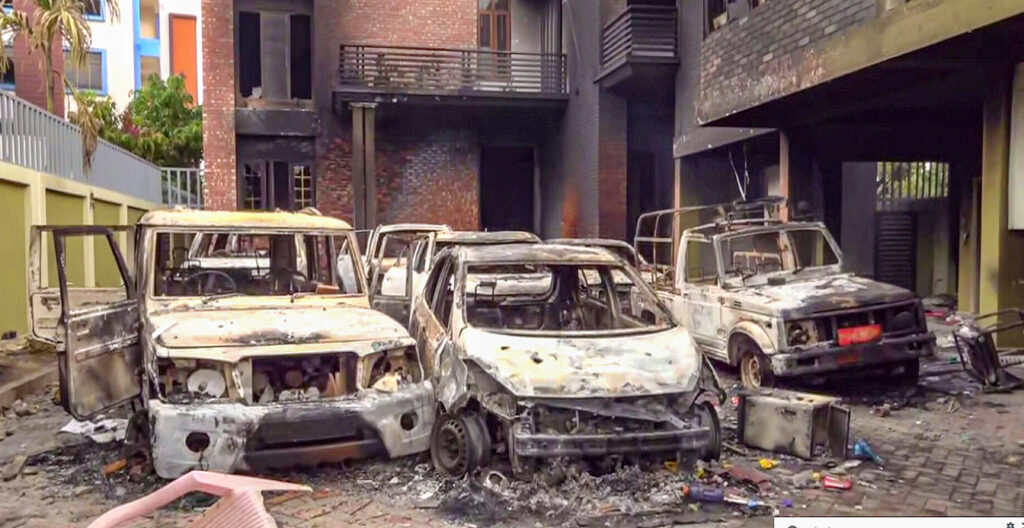
In recent weeks, the situation in Bangladesh has taken a deeply disturbing turn, with reports of widespread violence against Hindus by Islamist groups across 27 districts. The attacks have resulted in loss of lives, destruction of property, and a growing sense of fear and uncertainty among the Hindu community in Bangladesh. However, as these atrocities unfold, some Western media outlets like the BBC and The New York Times appear to be offering a narrative that is inconsistent with the grim reality on the ground.

The Logo of New York Times shows why they are spreading hate and fake news against Hindus.
Questionable Narratives and Selective Reporting
The BBC, known for its global reach and influence, has recently run stories emphasizing how Muslims are stepping up to protect Hindu temples in Bangladesh. While such acts of solidarity should indeed be acknowledged, the emphasis on these isolated incidents creates a skewed perception of the broader issue. The widespread violence and targeted attacks against Hindus are downplayed or overlooked, leaving readers with a half-baked understanding of the situation.
Similarly, The New York Times has reported that the attacks on Hindus were somehow a reaction to the political unrest following Sheikh Hasina’s government’s fall from power. This narrative not only fails to address the deeply rooted religious tensions in the region but also seems to justify or explain away the violence as a mere political consequence, rather than acknowledging it as a targeted attack against a religious minority.
The Danger of Over-Simplification
By framing the violence as a political reaction, rather than as religious persecution, these outlets risk oversimplifying a complex and deeply troubling issue. The BBC and The New York Times are trusted sources of information for millions of people around the world, and their narratives shape public opinion and policy discourse. When they choose to highlight only the stories of Muslims protecting Hindus, or when they attribute the violence to political unrest, they obscure the full scale of the tragedy.
Such coverage not only minimizes the suffering of the victims but also perpetuates a dangerous narrative that overlooks the very real threat posed by Islamist extremism in the region. It suggests a reluctance to confront the uncomfortable truths about religious intolerance and communal violence, which are critical to understanding the situation fully.
The Problem of Bias and Selectivity
It is important to question why these media outlets are choosing to focus on certain aspects of the story while neglecting others. Is it a case of bias? Are these outlets, consciously or unconsciously, downplaying the violence against Hindus to avoid criticism from certain political or ideological quarters? Or is it a matter of editorial selectivity, where stories that align with certain narratives are given more prominence?
The portrayal of events in Bangladesh by the BBC and The New York Times raises concerns about media bias and the role of journalism in shaping public perception. In a world where information is a powerful tool, selective reporting can have serious consequences. It can influence international opinion, shape diplomatic relations, and even affect the safety and security of minority communities.
A Call for Responsible Journalism
Journalism carries a profound responsibility to report the truth, especially in situations where lives are at stake. The media must strive to present a balanced and accurate picture of events, rather than succumbing to the temptation of easy narratives that fit preconceived ideas. The plight of the Hindu community in Bangladesh deserves comprehensive coverage that addresses the full scope of the violence they are facing, rather than a narrative that downplays their suffering.
The international community, including influential media outlets like the BBC and The New York Times, must hold those responsible for these attacks accountable. They must shine a light on the dark corners of religious intolerance and extremist violence, rather than obscuring them with stories that only tell part of the story.
Conclusion: The Need for Greater Scrutiny
As consumers of news, we must be vigilant and critical of the information we receive. We must demand more from our media outlets, holding them to higher standards of accuracy and fairness. The coverage of the violence in Bangladesh by the BBC and The New York Times should prompt us all to ask difficult questions about bias, selectivity, and the power of media narratives. The truth must be reported in its entirety, without fear or favor, to ensure that justice is served and that the voices of the victims are heard.
The situation in Bangladesh is a tragedy that deserves the world’s attention. It is crucial that the media tells the full story, without minimizing the suffering of the victims or downplaying the seriousness of the violence. Only then can we hope to understand the true nature of the crisis and work towards a solution that protects the rights and lives of all communities.



About The Author