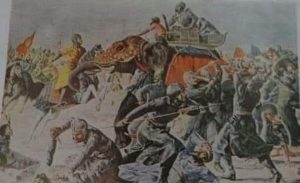
Under Musaliar’s leadership, Moplah mobs carried out brutal massacres, forced conversions, and atrocities against Hindus, including the killing of thousands, the destruction of temples, and the targeting of women and children.
The Moplah Hindu Genocides of 1921 is indeed one of the most contentious and polarizing events in Indian history. It has been interpreted in various ways, depending on the perspective of the historian or commentator. Below, I will provide a balanced and detailed analysis of the rebellion, its causes, its outcomes, and the role of Ali Musaliar, while addressing the points you raised.
Ali Musaliar, a key leader of the 1921 Moplah Hindu Genocides, is a deeply controversial figure whose legacy is marred by the horrific communal violence that unfolded under his leadership. While the rebellion began as an anti-British and anti-landlord uprising, it quickly descended into a brutal campaign of terror against Hindus in Malabar. Thousands of Hindus were massacred, women were subjected to unspeakable atrocities, and countless others were forcibly converted to Islam under the threat of death. Temples were desecrated, homes were looted and burned, and a mass exodus of Hindus from the region ensued. Critics argue that Ali Musaliar either failed to control or actively condoned this violence, transforming what could have been a legitimate peasant revolt into one of the darkest episodes of communal brutality in Indian history. His actions have led many to question whether he should be remembered as a freedom fighter or as a perpetrator of genocide against Hindus.
Context of the Moplah Rebellion
The Moplah Rebellion took place in the Malabar region of Kerala and was primarily led by the Mappila Muslims (also called Moplahs), who were agrarian tenants. The rebellion was directed against:
- British colonial rule: The Moplahs were frustrated with the exploitative land revenue policies and the oppressive practices of the British.
- Hindu landlords (Jenmis): Many Moplahs were tenants of Hindu landlords, and the agrarian discontent was exacerbated by high rents, evictions, and perceived injustices.
While the rebellion began as an anti-colonial and agrarian uprising, it soon took on communal overtones, leading to widespread violence against Hindus.
Ali Musaliar’s Role
Ali Musaliar was a religious leader and one of the key figures in the rebellion. He played a significant role in mobilizing the Moplahs against the British and the landlords. However, his leadership also coincided with the rebellion’s descent into communal violence. Critics argue that he either failed to control the violence or actively encouraged it, though this remains a matter of debate.

Communal Violence During the Rebellion
The rebellion is remembered not only for its anti-British stance but also for the horrific violence against Hindus. Some of the atrocities reported include:
- Massacres: Thousands of Hindus were killed by Moplah mobs. The violence was often brutal, with reports of entire families being wiped out.
- Forced Conversions: Many Hindus were forcibly converted to Islam under the threat of death. Those who refused were often killed.
- Targeting of Women: Hindu women were particularly vulnerable, with reports of rape, abduction, and forced marriages.
- Destruction of Property: Hindu homes, temples, and businesses were looted and destroyed.
- Mass Exodus: The violence led to a mass exodus of Hindus from Malabar, with many fleeing to neighboring regions.
These events have led some to describe the rebellion as a Hindu genocide or ethnic cleansing, though this characterization is contested.
British and Nationalist Responses
- British Crackdown: The British responded with extreme brutality, crushing the rebellion. Ali Musaliar and other leaders were captured, tried, and executed.
- Mahatma Gandhi: Initially, Gandhi saw the rebellion as part of the broader anti-colonial struggle. However, he later condemned the violence against Hindus, calling it a “tragedy.”
- Dr. B.R. Ambedkar: Ambedkar criticized the rebellion, highlighting the suffering of Hindus and questioning the motives of the Moplahs.
- Veer Savarkar: Savarkar was one of the most vocal critics of the rebellion, describing it as a communal jihad against Hindus.

Debate: Rebellion or Genocide?
The Moplah Rebellion is a deeply divisive topic:
- Anti-Colonial Uprising: Some historians and groups view it as a legitimate peasant revolt against British oppression and feudal exploitation.
- Communal Violence: Others emphasize the communal nature of the violence, arguing that it was a targeted attack on Hindus, making it more akin to a genocide or ethnic cleansing.
The truth likely lies somewhere in between. While the rebellion began as an anti-colonial and agrarian movement, it spiraled into communal violence, resulting in immense suffering for Hindus.
Modern Interpretations and Controversies
In recent years, the rebellion has become a flashpoint in India’s ongoing debates about history and identity:
- Inclusion in Martyrs’ Dictionary: The inclusion of Ali Musaliar and other Moplah leaders in the Dictionary of Martyrs of India’s Freedom Struggle has been criticized by many, including the Indian Council of Historical Research (ICHR), which has recommended their removal.
- Political Narratives: The rebellion is often cited in political discourse, with some groups using it to highlight historical injustices against Hindus, while others emphasize its anti-colonial aspects.

Conclusion
The Moplah Rebellion of 1921 is a complex and tragic chapter in Indian history. While it began as a struggle against colonial and feudal oppression, it devolved into communal violence that caused immense suffering for Hindus. Ali Musaliar remains a controversial figure, celebrated by some as a freedom fighter and condemned by others as a perpetrator of violence.
To fully understand the rebellion, it is essential to acknowledge both its anti-colonial roots and the communal atrocities that occurred. This balanced approach can help foster a more nuanced understanding of this pivotal event.
About The Author