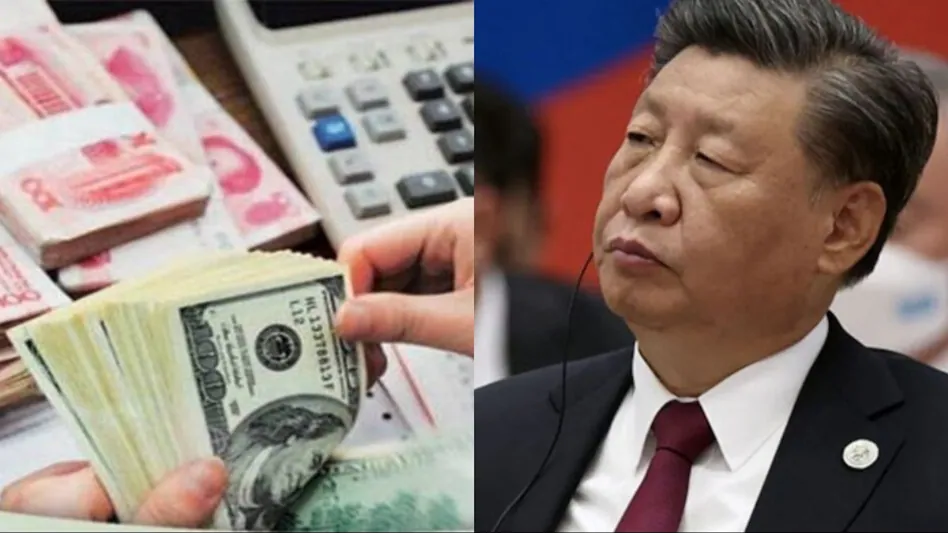
China, the world’s second-largest economy, is facing significant economic challenges, with clear signs of a looming recession similar to the 2008 crisis. Recent stimulus measures, reminiscent of the 2020 lockdown, have been announced to boost the economy. The country’s real estate index has plummeted by 82% in the last two years, and deflation is at its longest stretch since 1999. Unemployment rates have reached multi-decade highs, and tensions with the United States are at their peak, with stock markets showing worsening conditions. The critical question arises: Is China leading the global economy into a recession?
Key Challenges in China’s Economy
- Real Estate Crisis
The real estate sector accounts for nearly one-third of China’s economy, but it has been struggling deeply for several years. The crisis began in 2021 when Evergrande, one of the country’s largest real estate companies, went bankrupt. Since then, the real estate index has fallen to levels last seen during the 2008 financial crisis. The collapse of the real estate sector has also threatened the banking sector, as Chinese banks have heavily invested in this sector. - Prolonged Deflation
China is experiencing its longest period of deflation since 1999. In 2008, the country faced deflation for five consecutive quarters, but this time it has surpassed even that period. While the rest of the world is grappling with inflation, China is experiencing the opposite—a continuous fall in prices. Deflation is considered more dangerous than inflation because it indicates a lack of economic demand, causing consumers to delay purchases, which can freeze economic activity. - High Unemployment and Weak Consumer Demand
Unemployment in China has reached its highest level in decades. Manufacturing activities have slowed down, and the collapse of the real estate sector has put immense pressure on the construction industry. Consumer demand is significantly weak, and Chinese consumers are behaving as if the country is already in a recession. To counter this, the central bank has announced several measures, including a 0.5% cut in the reserve requirement ratio, a 0.2% reduction in the 7-day RRP rate, mortgage rate cuts, and injecting $142 billion into the banking system.
US-China Tensions and Economic Impact
China is reducing its holdings in U.S. Treasury securities, which now stand at $780 billion—the lowest level in 15 years. Over the past three years, China has cut its holdings by 30%, amounting to $300 billion. Relations between the two countries have been strained for several years, with both sides taking actions against each other’s companies. The U.S. has increased tariffs on several Chinese imports, further intensifying the trade tensions.
Global Impact of China’s Recession
China’s recession will have a ripple effect on the global economy because, for nearly three decades, China has been the engine of global growth. Markets worldwide are filled with Chinese goods, and many U.S. and Western companies have significant business operations in China. A recession in China will negatively impact these businesses, potentially leading to reduced profits and a global economic slowdown.
Is China Pushing the Global Economy Towards a Recession?
Given the current economic challenges, many experts fear that China’s downturn is a warning sign for the global economy. If China’s economic troubles are not resolved soon, it could lead to broader financial instability worldwide, affecting international trade, supply chains, and investment landscapes.
Conclusion
China’s economic struggles, marked by a real estate meltdown, prolonged deflation, high unemployment, and escalating tensions with the U.S., are not just domestic issues—they pose a significant threat to the global economy. Investors, businesses, and policymakers worldwide must closely monitor China’s economic developments to navigate the potential risks ahead.
Tags: China Economy, Recession, Global Economy, Real Estate Crisis, Unemployment, Deflation, US-China Tensions, Economic Crisis, Financial Markets, Recession Signs
About The Author