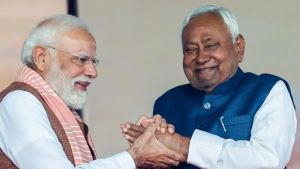
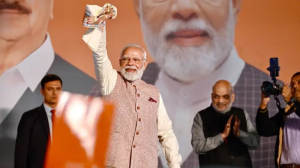
Arvinf Kejriwal defeated by Pravesh Varma from New Delhi seats in 2025 assembly election.
The 2023 Delhi Assembly elections have delivered a seismic shift in the capital’s political landscape. The Aam Aadmi Party (AAP), led by Arvind Kejriwal, faced a crushing defeat, while the Bharatiya Janata Party (BJP) secured a landslide victory, marking a dramatic reversal of fortunes. This election result has not only reshaped Delhi’s political dynamics but also raised critical questions about AAP’s strategy, BJP’s resurgence, and the future of governance in the national capital.

Election Results at a Glance
- BJP’s Dominance: The BJP won a staggering 65 out of 70 seats, securing a massive mandate. This is a historic victory for the party, which had been in the opposition in Delhi since 2015.
- AAP’s Collapse: AAP, which had won 62 seats in the 2020 elections, was reduced to just 5 seats. This is a shocking decline for a party that had once been seen as the face of anti-corruption and grassroots governance.
- Congress’ Irrelevance: The Congress party failed to win a single seat, continuing its downward spiral in Delhi politics.

What Went Wrong for AAP?
- Anti-Incumbency and Governance Fatigue:
- After nearly a decade in power, AAP faced significant anti-incumbency. While the party had delivered on promises like free electricity and improved education, issues like water scarcity, pollution, and unemployment remained unresolved.
- The “freebies” model, which once won AAP massive support, seemed to lose its appeal as voters sought more substantive solutions to Delhi’s problems.
- Over-Reliance on Kejriwal’s Image:
- AAP’s campaign heavily relied on Arvind Kejriwal’s personal appeal, but the lack of strong second-rung leaders hurt the party. Kejriwal’s absence from Delhi during the campaign (due to his focus on national politics) also alienated local voters.
- BJP’s Aggressive Campaign:
- The BJP launched a relentless campaign, targeting AAP’s failures and highlighting issues like corruption, law and order, and the alleged misuse of public funds.
- The party also capitalized on the Modi factor, with the Prime Minister’s rallies drawing massive crowds and energizing the BJP’s base.
- Polarization and Nationalism:
- The BJP successfully leveraged national issues like the Ram Mandir, Article 370, and national security to consolidate its Hindu voter base. This polarization overshadowed AAP’s focus on local governance.
- Internal Dissent and Infighting:
- AAP faced internal challenges, with several leaders expressing dissatisfaction with the party’s direction. This infighting weakened the party’s cohesion and campaign efforts.

Why Did BJP Succeed?
- Unified Leadership and Strategy:
- The BJP’s campaign was well-organized and strategically planned. The party focused on local issues while also appealing to voters’ nationalist sentiments.
- Leaders like Amit Shah and JP Nadda played a crucial role in galvanizing the party’s cadre and ensuring a strong ground presence.
- Modi’s Charisma:
- Prime Minister Narendra Modi’s rallies and speeches resonated deeply with voters. His emphasis on development, nationalism, and strong leadership struck a chord with Delhi’s electorate.
- Targeting AAP’s Weaknesses:
- The BJP effectively highlighted AAP’s shortcomings, including allegations of corruption, mismanagement of funds, and failure to address key issues like pollution and unemployment.
- Expanding Voter Base:
- The BJP made significant inroads into AAP’s traditional vote banks, including the urban poor and middle class. The party’s focus on Hindutva and nationalism also helped consolidate its core voter base.

Key Takeaways from the Election
- Shift in Voter Priorities:
- Delhi’s voters have signaled a shift from local governance issues to broader national concerns. This reflects the growing influence of national politics on state elections.
- Decline of AAP’s Grassroots Appeal:
- AAP’s defeat raises questions about its ability to sustain its grassroots appeal. The party will need to reinvent itself and address internal challenges to remain relevant.
- BJP’s Dominance in Urban Centers:
- The BJP’s victory underscores its dominance in urban areas, where its focus on development, nationalism, and strong leadership resonates strongly.
- Congress’ Continued Decline:
- The Congress party’s failure to win even a single seat highlights its inability to connect with voters or present a credible alternative.
What’s Next for Delhi?
- BJP’s Governance Challenge: With a massive mandate, the BJP now faces the challenge of delivering on its promises. The party will need to address Delhi’s pressing issues, including pollution, water scarcity, and unemployment, to maintain public trust.
- AAP’s Road to Redemption: AAP must introspect and rebuild its organization. The party will need to focus on strengthening its grassroots presence and addressing internal dissent.
- Congress’ Existential Crisis: The Congress party’s continued decline raises existential questions about its future in Delhi and beyond.
Conclusion
The 2023 Delhi Assembly elections have marked a turning point in the capital’s political journey. While the BJP’s landslide victory reflects its growing dominance, AAP’s stunning defeat serves as a wake-up call for the party. As Delhi prepares for a new era of governance, the lessons from this election will shape the strategies of all political players in the years to come.
Tags:
Delhi election 2023, AAP defeat, BJP victory, Arvind Kejriwal, Narendra Modi, Delhi Assembly elections, Indian politics, election analysis, BJP landslide, AAP collapse, Congress decline, Delhi governance, political shift, election results, Delhi voters, Hindutva, nationalism, anti-incumbency, grassroots politics.
About The Author