How Certain Narratives Were Normalized—and Why the Discomfort Today Feels Inevitable
For decades, Indian cinema has claimed moral superiority by positioning itself as “neutral,” “progressive,” and “humanist.” Yet, when examined closely, a pattern emerges—one that reveals selective empathy, ideological bias, and a deep discomfort with narratives that challenge a long-held worldview.
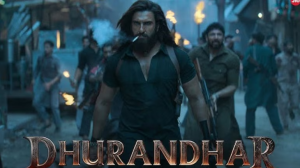
Recent films like The Kashmir Files and Dhurandhar have not created this discomfort. They have merely exposed it.
The Long Tradition of Sympathetic Terror Narratives
Between 1990 and 2014, several major Indian films explored terrorism as a theme—but with a very specific lens. Terrorists and insurgents were frequently portrayed through their pain, motivations, inner conflicts, and emotional depth, while the suffering of their victims—especially Hindu victims—was often marginalized or erased.

Let’s look at a few prominent examples:
<h3>Roja (1992) – Directed by Mani Ratnam</h3>
Widely celebrated as a patriotic film, Roja humanized a Kashmiri militant leader by showcasing his ideological depth and emotional complexity. This portrayal emerged during the very period when Kashmiri Hindu women like Girija Tickoo were brutally assaulted and murdered—crimes that found no space in the film’s narrative.
Decades later, when The Kashmir Files portrayed these suppressed realities, many of the same filmmakers and critics strongly opposed it, accusing it of divisiveness. The contrast raises an uncomfortable question:
Why was empathy acceptable then, but “propaganda” now?
<h3>Drohkaal (1994)</h3>
Marketed as a psychological exploration of terrorism, the film leaned heavily toward an anti-state perspective, often portraying India’s security apparatus with suspicion while softening the ideological violence of insurgents.
<h3>Maachis (1996) – Directed by Gulzar</h3>
Set against Punjab’s insurgency, the film framed terrorism largely as a reaction to police brutality. Ordinary youth were shown being “pushed” into extremism, while the terror itself was often contextualized, even justified, through emotional framing.
<h3>Dil Se.. (1998) – Mani Ratnam</h3>
Once again, insurgency—this time in the North-East—was explored through the lens of a female suicide bomber’s emotional trauma. The film deeply humanized anti-India violence, while the nation itself remained an abstract, distant entity.
<h3>Mission Kashmir (2000)</h3>
A young man’s journey into terrorism was framed primarily through loss and trauma, reinforcing the recurring theme: the terrorist as a victim first.
<h3>Fiza (2000)</h3>
A missing brother turns extremist after riots, and the narrative centers on his internal struggle and moral dilemma—again prioritizing the perpetrator’s psychology over the victims of violence.

<h2>The Pattern Continues</h2>
Films such as:
• The Terrorist (1998)
• Hu Tu Tu (1999)
• Black Friday (2004)
• Yahaan (2005)
• Haider (2014)
all followed a similar trajectory—humanizing terror, questioning the state, and presenting national security forces in moral grey, while rarely centering the civilian victims who bore the brunt of violence.
<h2>What Changed?</h2>
What has changed is not cinema—but who is finally being heard.
Films like The Kashmir Files disrupted a decades-long monopoly over narrative framing. For the first time, victims—especially Hindu victims—were placed at the center, without dilution, without apology.
This shift has unsettled those who were comfortable critiquing the nation endlessly but deeply uneasy when the same scrutiny turns inward.
<h2>Why the Backlash Was Predictable</h2>
For years, nationalism was portrayed as crude, emotional, or dangerous—while ideological opposition to India was intellectualized and aestheticized. Now, as unapologetic national narratives gain public resonance, the discomfort is visible.
It is not about cinema quality alone.
It is about losing narrative control.
Conclusion
The debate is not about freedom of expression—it always existed.
The debate is about whose pain is allowed to be shown.
And that is why this moment feels so unsettling to many.
Because the season has changed.
And the spotlight is no longer selective.
Hashtags:
#IndianCinema, #SelectiveHumanism, #NarrativeControl, #KashmirFiles, #Dhurandhar, #TerrorismInCinema, #IdeologicalBias, #BollywoodHypocrisy, #NationFirst, #CinemaAndPolitics, #HiddenTruths, #VictimsVoices, #ChangingNarratives, #IntellectualDishonesty
About The Author