
Introduction
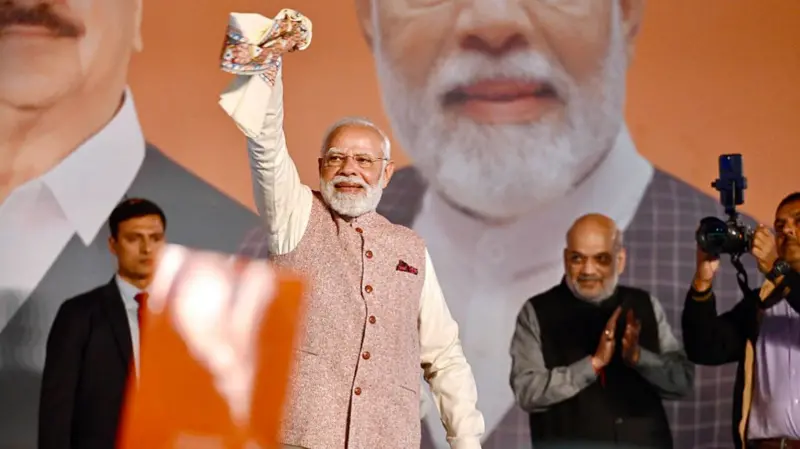
The results of the Bihar Assembly Election are out, bringing clarity to the political landscape of one of India’s most politically vibrant states. With results declared for all 243 assembly seats, the National Democratic Alliance (NDA) has emerged as the clear winner, while the opposition Mahagathbandhan faced a significant setback.
This election has reshaped political equations, highlighted shifting voter sentiments, and opened discussions on the future course of Bihar’s governance.
NDA Secures a Comfortable Majority
The National Democratic Alliance (NDA), led by the Bharatiya Janata Party (BJP) and Janata Dal (United), registered a strong performance:
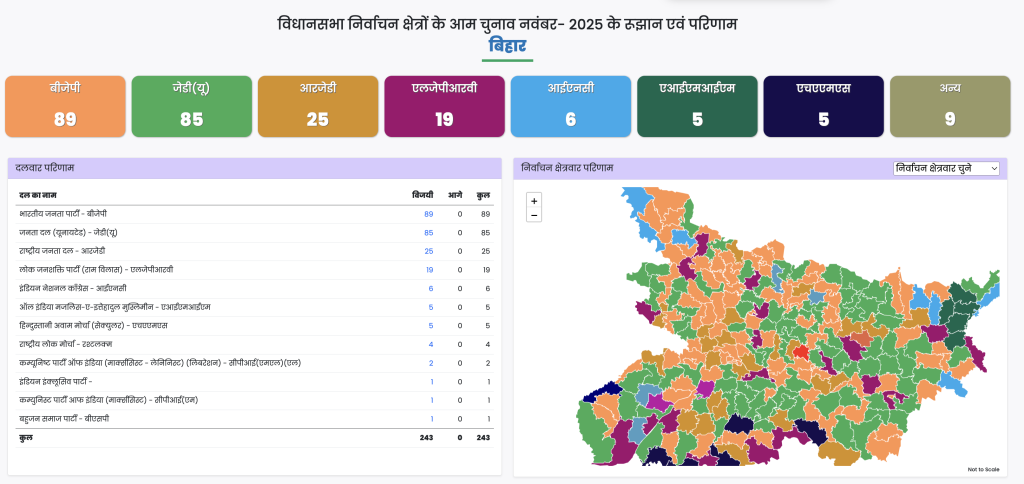
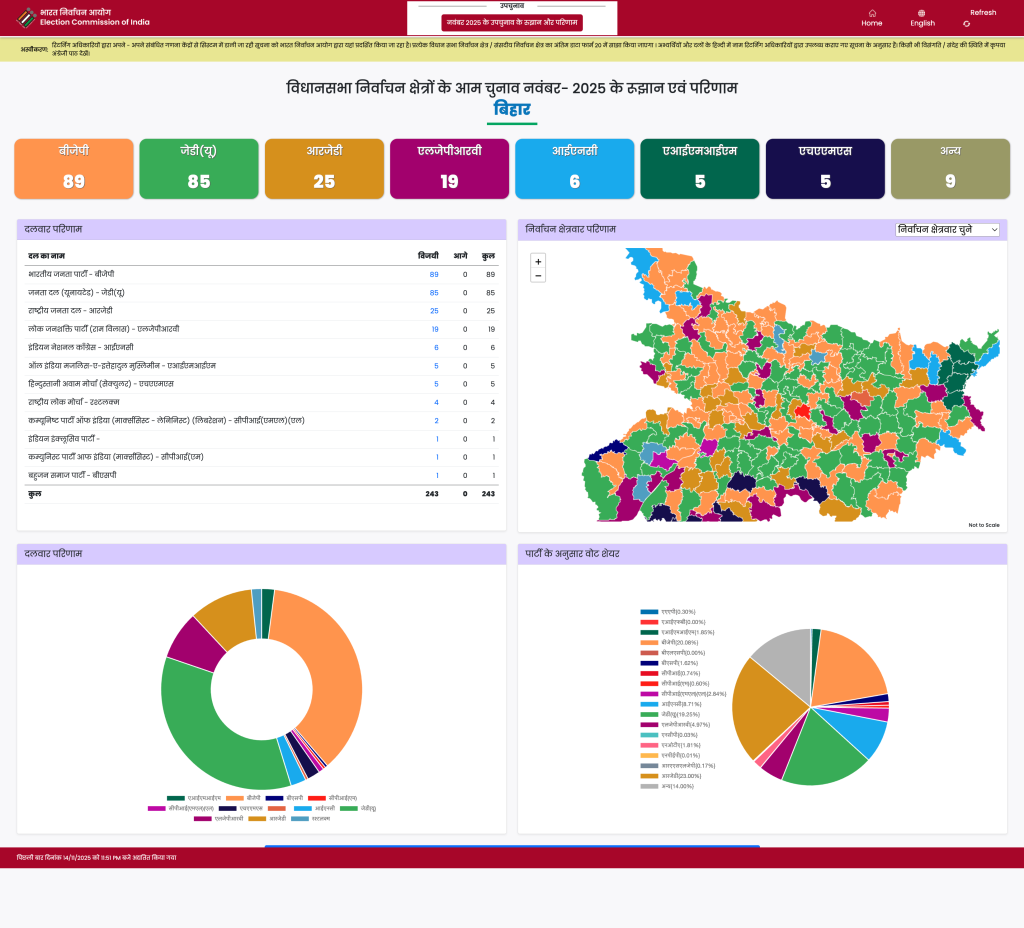
- BJP: 89 seats
- JD(U): 85 seats
- Lok Janshakti Party (Ram Vilas): 19 seats
- Hindustani Awam Morcha (Secular): 5 seats
- Rashtriya Lok Morcha: 4 seats
Together, the alliance has comfortably crossed the majority mark of 122 seats, ensuring a stable formation of government.
The BJP emerged as the single largest party, marking one of its strongest performances ever in state politics. JD(U), despite trailing slightly behind its ally, has maintained its position as a major political force in Bihar.
A Tough Election for the Grand Alliance (Mahagathbandhan)
The Mahagathbandhan, led by the Rashtriya Janata Dal (RJD), witnessed a disappointing outcome:
- RJD: 25 seats
- Congress: 6 seats
- CPI(ML) Liberation: 2 seats
Despite strong campaigning and attempts to regain lost ground, the alliance could secure only a fraction of the seats it hoped for.
The RJD, which once dominated Bihar politics, has seen a sharp decline in its support base—raising critical questions about its future strategy and leadership direction.
AIMIM and Smaller Parties Make Their Mark
The election also saw interesting performances from smaller parties:
- AIMIM: 5 seats
- Indian Inclusive Party: 1 seat
- CPI(M): 1 seat
- BSP: 1 seat
AIMIM’s victory in five constituencies is particularly notable, signaling its growing influence in pockets of the state, especially in Muslim-majority regions. Their performance could have implications for future political coalitions and vote share dynamics.
Key Taaways
1. BJP Strengthens Its Position
With 89 seats, the BJP has emerged stronger than ever in Bihar, demonstrating its deepening grassroots support across caste and regional lines.
2. JD(U) Holds Ground
Despite predictions of a decline, JD(U) has secured 85 seats, showing that Chief Minister Nitish Kumar still commands significant trust among voters.
3. RJD Faces a Reality Check
Winning just 25 seats, the RJD faces an existential challenge. Its defeat signals a shift in the political aspirations of the youth and the rural voter base that once formed its backbone.
4. Rise of Regional Alternatives
AIMIM and smaller coalitions have expanded their footprint, proving that Bihar’s electorate is open to new political narratives.
5. NDA’s Strategic Coalition Proves Effective
The combined strength of BJP, JD(U), LJP, HAM, and RLM proved to be a winning formula, reflecting unified messaging and strong last-mile mobilization.
Conclusion
The Bihar Assembly Election results highlight a decisive shift in the state’s political landscape. With the NDA securing a robust majority, the focus will now shift to governance, development, law and order, and job creation—issues that continue to matter deeply to the people of Bihar.
As political alliances recalibrate and parties introspect, the next five years will determine whether this mandate translates into meaningful progress for the state.
Hashtags: BiharElection2025, BiharPolitics, NDAVictory, BJP, JDU, LJP, RJD, Congress, AIMIM, BiharNews, ElectionAnalysis, IndianPolitics
About The Author